
Lateral knee pain on the trails? Your ITB may be the symptom, not the cause.
Almost every runner I see in Denver with pain on the outside of the knee has already tried the same three things before walking through our door: foam rolling the IT band, stretching the IT band, and resting until it calms down enough to run again. All three tend to help a little and fix nothing, because the IT band itself is rarely where this problem actually starts.
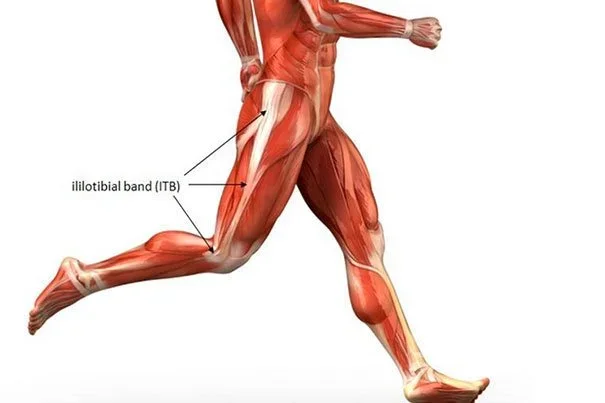
The iliotibial band is a thick fascial structure that runs from the top of the hip down the outside of the thigh to just below the knee. It does not have much capacity to lengthen or shorten on its own the way muscle does, which is part of why stretching it directly gives such limited, temporary relief. The real driver is almost always how the hip and knee are behaving while you run, not the tissue itself.
There are three movement patterns I check for in almost every runner who comes in with this complaint.
Pelvic drop
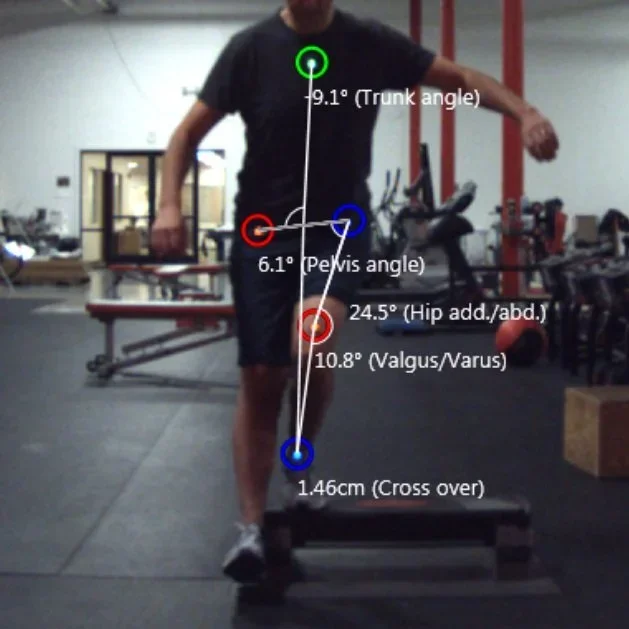
Picture your belt line while you're on one leg mid-stride. In an ideal world it stays level. When the hip on the swing-leg side drops noticeably below level, that is pelvic drop, and it puts direct extra tension through the ITB with every step.
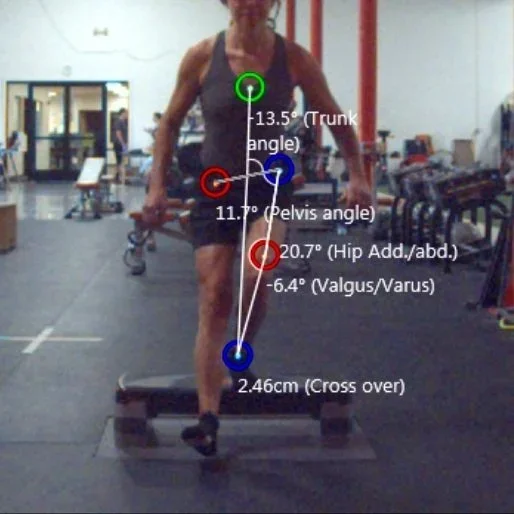
This is hard to self-assess while actually running, but a simple step-down test in front of a mirror at home will usually reveal it. Runners who drop significantly in that test tend to show the same pattern, often worse, once we get them on camera mid-run. I've measured drop angles in the 6 to 12 degree range in runners with active ITB symptoms, and anything approaching double digits is a strong signal that glute medius is not doing its job of controlling the pelvis.
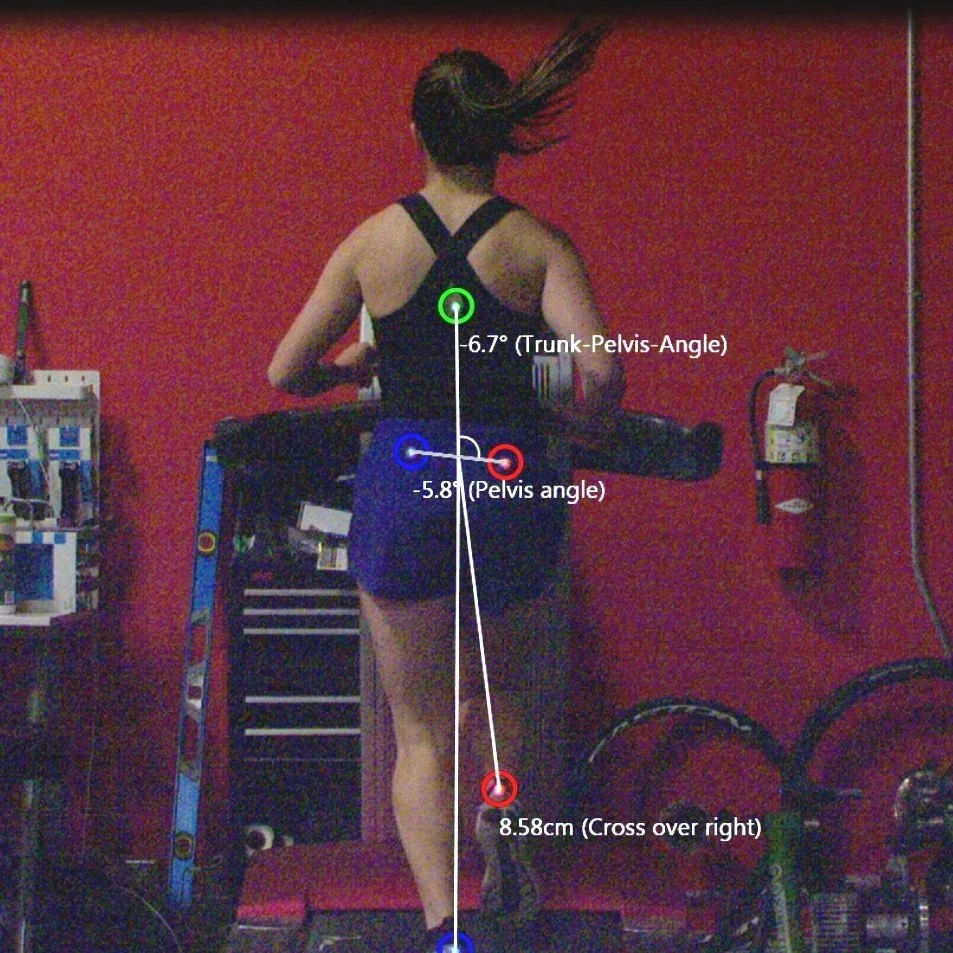
In the runner above you can note a pelvic drop of 5.8 degrees. This amount of drop would cause some concern. As the pelvic angle increases we should expect lateral thigh irritation and possible symptoms related to lack of active shock absorption.
Dynamic knee valgus
This is the knee visibly collapsing inward toward the midline during stance phase, mostly driven by the femur internally rotating underneath a pelvis that isn't stable. Glute maximus is supposed to control this rotation. When it isn't firing adequately through the gait cycle, the knee caves in, and that motion combined with pelvic drop puts the ITB under significant repetitive strain during exactly the phase of running where it's already absorbing the most load.
Runners showing both patterns together, some meaningful pelvic drop plus visible valgus, are the ones who tend to have the most stubborn, recurring symptoms. Both faults point back to the same fix: getting the glute complex to actually do its job.
Limited hip extension
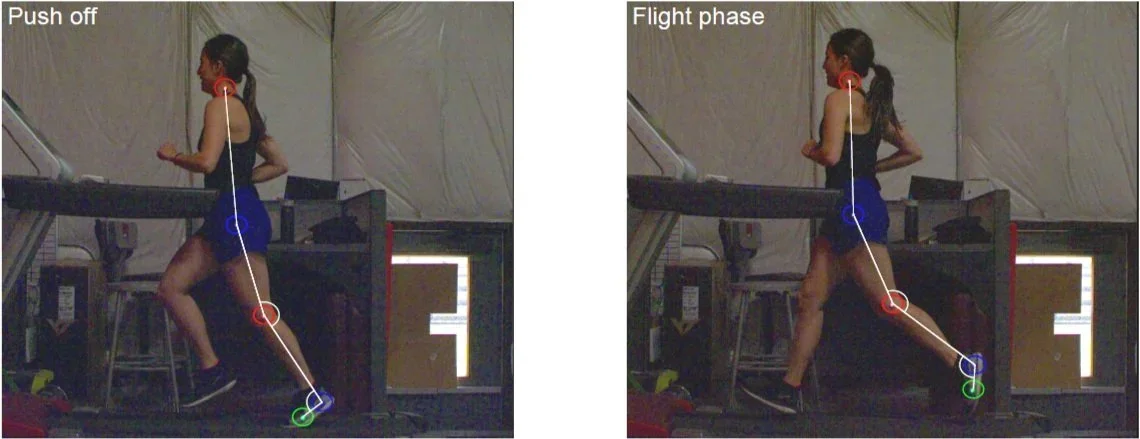
The third pattern, and the one most runners have never had assessed, is a lack of true hip extension. This is the femur's ability to move behind the body during the swing phase of gait. I want to see close to 15 degrees of passive hip extension, measured with the pelvis held neutral, not rotated forward.
Almost every runner I evaluate for a lower extremity complaint comes up short here. What's sneaky about this deficit is that it often doesn't look obviously limited on video, because the body fakes the range by rotating the pelvis forward and letting the lumbar spine overextend instead. The femur looks like it's moving well behind the body, but the motion isn't actually coming from the hip joint. Restricted hip extension limits access to the glutes during exactly the phase of gait where they need to be working hardest, which loops right back into the pelvic drop and valgus issues above.
What actually helps
Once we know which of these patterns is driving the irritation, and it's frequently more than one at once, the fix is training the hip to control the pattern, not treating the ITB directly.
Single leg squats, focused on keeping the belt line level and the knee tracking directly over the foot, are one of the most direct ways to retrain pelvic control under load.
Banded split squats, cueing external rotation torque through the femur so the knee stays stacked over the foot rather than drifting inward, target the same glute max function that controls knee valgus.
Fire hydrants and skaters are excellent, low-tech ways to isolate and activate glute max and glute medius specifically. Start with static holds to build a real activation pattern before moving into repetitions.
A tail-tucked hip flexor stretch, held gently for a longer duration, opens up the front of the hip and gives the femur more room to move into extension without the lumbar spine bailing you out.
Soft tissue work on the glutes themselves, not the ITB. Rolling side to side rather than up and down tends to find and release trigger points more effectively in this muscle group.
If lateral knee pain has been a recurring visitor on your trail runs no matter how much you roll and stretch the ITB itself, it's worth getting your hip mechanics actually assessed. The tissue that hurts is rarely the tissue causing the problem.